
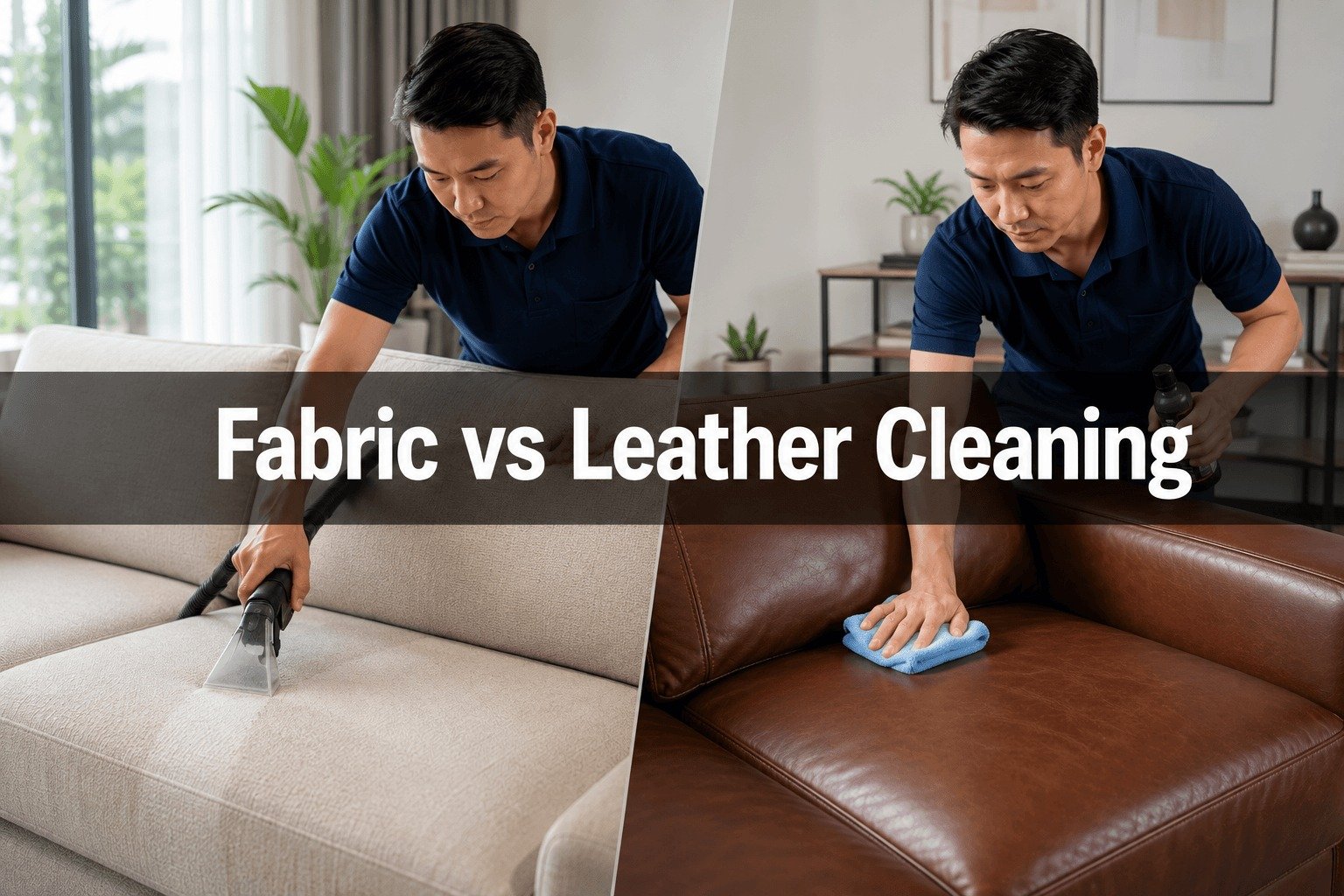
If you have ever stared at a stained sofa wondering whether you made the right choice buying fabric or leather, you are not alone. The fabric vs leather cleaning debate matters far more than most homeowners realise, because the material you own determines everything from the products you can safely use to how often you will need professional help. Get it wrong, and you risk permanently damaging an expensive piece of furniture.
This guide breaks down exactly how fabric and leather cleaning differ, walks through the right methods for each, and helps you understand which material suits your lifestyle. By the end, you will know how to remove stains safely, avoid the mistakes that ruin upholstery, and decide when it’s time to call in professionals like Cleanitize.
Why Fabric and Leather Need Completely Different Cleaning Approaches
Fabric and leather are not just different textures; they are different materials with entirely different chemical structures. Fabric is woven from fibres (cotton, polyester, linen, or blends) that absorb liquids deep into their weave. Leather, on the other hand, is a treated animal hide with a semi-porous surface that reacts badly to excess moisture and harsh chemicals.
This fundamental difference is why using the same cleaning product on both can cause disasters; think discoloured leather or a fabric sofa that develops mildew from over-wetting.
How Fabric Upholstery Behaves
Fabric absorbs spills quickly, which helps prevent surface staining if you act fast, but it also means liquids can seep into the cushioning underneath. Fabric is generally more breathable, making it popular in Singapore’s humid climate, though this same breathability can trap dust, allergens, and odours over time.
How Leather Upholstery Behaves
Leather resists spills longer because it’s less porous, giving you a slightly longer window to wipe up messes before they set in. However, leather is sensitive to heat, direct sunlight, and alcohol-based cleaners, all of which can strip its natural oils and cause cracking.
Cleaning Methods: Fabric vs Leather Cleaning Compared
The core of any fabric vs leather cleaning comparison comes down to method. Here’s a side-by-side breakdown.
| Aspect | Fabric Cleaning | Leather Cleaning |
| Primary method | Steam cleaning, hot water extraction, dry foam | Wipe-down with leather-specific cleaner and conditioner |
| Water tolerance | Moderate to high (depending on fabric type) | Low; excess water damages the surface |
| Recommended frequency | Deep clean every 6–12 months | Condition every 3–6 months, wipe weekly |
| Common products | Fabric-safe upholstery shampoo, enzyme cleaners | pH-balanced leather cleaner, leather conditioner |
| DIY risk level | Moderate | High; easy to over-wet or over-scrub |
| Best for allergy sufferers | Requires more frequent deep cleaning | Generally easier, fewer allergen traps |
| Professional service benefit | Removes deep-set stains and odours | Restores shine, prevents cracking |
Stain Removal: What Actually Works
Removing Stains from Fabric
For fresh spills, blot immediately with a clean, dry cloth; never rub, as this pushes the stain deeper into the fibres. A mild solution of water and dish soap works for most everyday stains like coffee or food. For stubborn marks such as ink or wine, an enzyme-based cleaner formulated for upholstery breaks down organic compounds without bleaching the fabric.
Removing Stains from Leather
Leather requires a gentler touch. Wipe spills immediately with a barely damp microfibre cloth; no soaking. For grease or oil marks, sprinkle cornstarch on the spot, let it absorb overnight, then brush it away. Avoid baby wipes, vinegar, or alcohol-based solutions, as these strip leather’s protective finish and accelerate cracking.
Maintenance and Durability Over Time
Leather generally outlasts fabric when properly maintained, often lasting 15–25 years compared to fabric’s typical 7–15 year lifespan. However, that durability depends entirely on consistent conditioning. Neglected leather cracks and fades faster than well-maintained fabric.
Fabric, meanwhile, is more forgiving of inconsistent care but shows wear through pilling, fraying, and colour fading; especially in sun-exposed areas common in Singapore homes and condos.
Climate Considerations for Singapore Homes
Singapore’s humidity accelerates mildew growth in fabric upholstery if it is not dried properly after cleaning, while the same humidity can cause leather to feel sticky or develop mould in poorly ventilated spaces.
Both materials benefit from dehumidifiers and good airflow, but leather specifically needs conditioning more frequently in humid conditions to prevent it from drying out under air conditioning. The same humidity concerns apply to other soft furnishings at home; if you are also wondering whether your curtains need steam cleaning or a full wash, see our guide on Curtain Steam Cleaning vs Dry Cleaning.
Cost Comparison: Cleaning and Upkeep
Fabric cleaning products and professional steam cleaning services tend to cost less per session than leather conditioning treatments, but fabric often requires more frequent deep cleans to stay fresh.
Leather conditioning costs more per visit but is needed less often, which can even out over a sofa’s lifetime. Long-term, leather furniture typically has a higher upfront cost but lower cumulative cleaning costs if it’s well cared for.
Common Mistakes That Damage Upholstery
- Using the wrong cleaner on leather; dish soap and all-purpose cleaners strip its finish.
- Over-wetting fabric; soaking a stain instead of blotting spreads it and invites mould.
- Skipping a patch test; always test any product on a hidden area first.
- Direct sunlight exposure; fades fabric dye and dries out leather.
- Ignoring manufacturer cleaning codes; fabric often has a “W,” “S,” “WS,” or “X” code indicating safe cleaning agents; leather has grain-specific care instructions.
- Vacuuming leather with a hard brush attachment; this scratches the surface over time.
When to Call Professional Upholstery Cleaners
DIY cleaning handles everyday maintenance well, but certain situations call for professional expertise: deep-set stains, persistent odours, pet accidents, mould growth, or leather that is begun to crack or discolour.
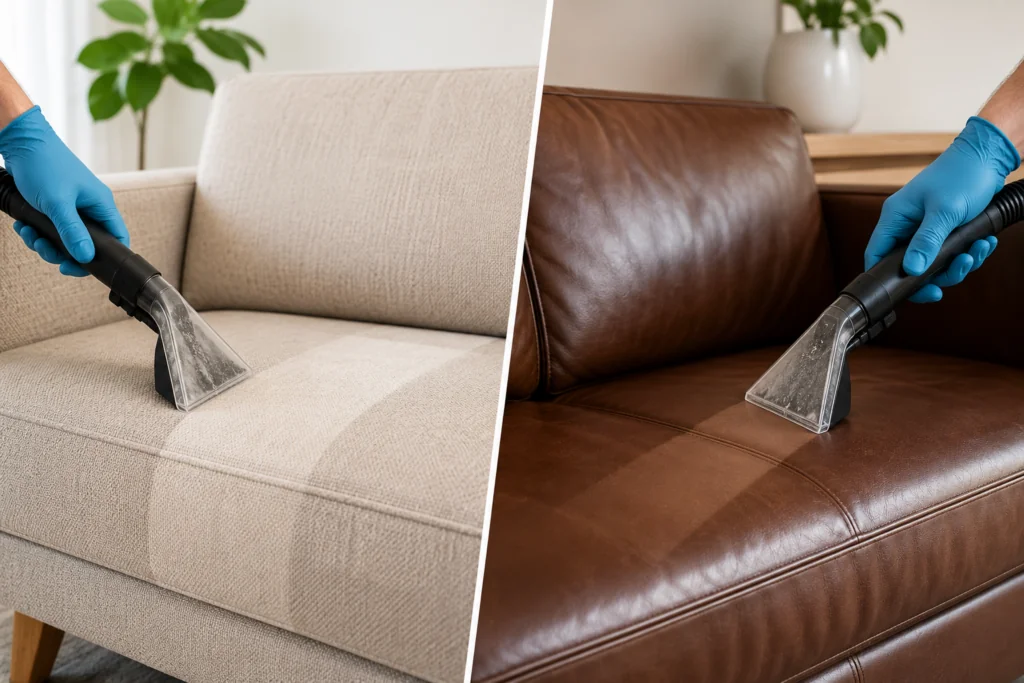
Professional cleaners use equipment like hot water extraction for fabric and specialised pH-balanced treatments for leather that safely lift dirt without damaging fibres or hide. This is particularly valuable in Singapore, where humidity makes DIY drying difficult to control.
How to Choose Between Fabric and Leather for Easier Cleaning
If you have young children, pets, or a household prone to spills, leather’s wipe-and-go convenience is often easier day-to-day, provided you are willing to condition it regularly. If you prioritise comfort, breathability, and a wider range of colours and textures, fabric may suit you better, especially with fabric-protection treatments applied at purchase.
Ultimately, the fabric vs leather cleaning decision is not about which material is “easier” in absolute terms; it’s about which maintenance routine fits your lifestyle and how much time you are willing to invest.
Final Thoughts and Practical Next Steps
Both fabric and leather can look pristine for years with the right care, but the approach to each is not interchangeable. Fabric needs prompt blotting, occasional deep steam cleaning, and protection from over-wetting. Leather needs gentle wiping, regular conditioning, and protection from heat and harsh chemicals.
Whichever you own, a professional deep clean every 6–12 months extends its life significantly and catches problems; like early mould or cracking; before they become costly to fix. If you are unsure which method suits your specific upholstery, a quick consultation with a professional cleaning service can save you from irreversible damage.
Prefer to have it done for you? See our leather sofa cleaning in Singapore and fabric sofa cleaning in Singapore service page for what is included, how long it takes and how to get a quote.