
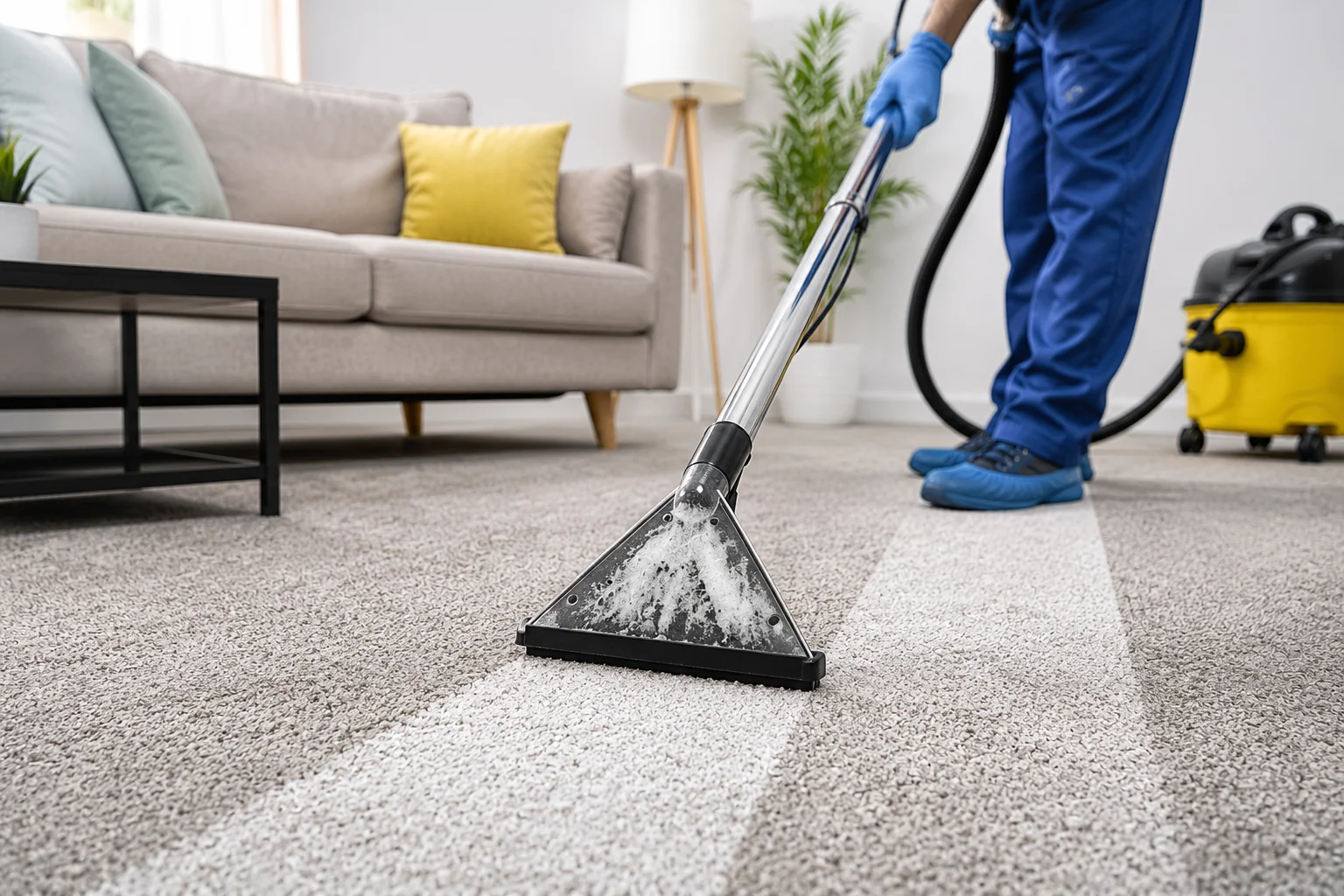
Vacuuming is a habit. Deep cleaning is a necessity. Most homeowners vacuum once or twice a week and assume that’s enough to keep their carpet healthy but vacuuming only removes surface dirt. It can’t reach the dust, allergens, bacteria, and grime trapped deep in the carpet fibers and padding below.
Over time, that buildup affects more than just how your carpet looks. It can impact indoor air quality, trigger allergies, and shorten the lifespan of your flooring investment. This is especially true in Singapore, where high humidity and heavy rainfall create ideal conditions for mold, dust mites, and bacteria to thrive in carpet fibers. Below are the clearest signs that it’s time to call in a professional carpet cleaning service in Singapore.
1. Visible Stains That Won’t Lift
If you’ve scrubbed a stain repeatedly and it keeps resurfacing or never fully disappeared in the first place that’s a sign the discoloration has soaked into the carpet backing or padding. Household cleaners and spot treatments only work on surface-level spills. Professional cleaners use hot water extraction and targeted stain-removal solutions that penetrate deep enough to break down set-in stains from wine, pet accidents, coffee, and mud.
2. Persistent Odors, Even After Cleaning
A carpet that smells musty, sour, or simply “off” days after you’ve vacuumed is holding onto more than dust. Odors usually come from trapped moisture, pet dander, mold spores, or bacteria living in the carpet fibers and padding. Febreze and carpet powders only mask the smell temporarily. In Singapore’s year-round humidity, trapped moisture in carpet fibers can turn musty far faster than in drier climates, which is why professional deep cleaning removes the source of the odor rather than covering it up. See our guide on dealing with musty carpet smells in humid weather for more detail.
3. Increased Allergy or Asthma Symptoms
Carpets act like a filter, trapping dust mites, pollen, pet dander, and other allergens. Vacuuming captures some of this, but a household vacuum cleaner typically only removes about 15–20% of the debris embedded deep in carpet fibers. If you or your family are sneezing more at home, dealing with itchy eyes, or noticing worsened asthma symptoms indoors, your carpet could be the culprit. Professional cleaning removes allergens that regular vacuuming leaves behind.
4. Carpet Feels Stiff, Rough, or Matted
Healthy carpet fibers should feel soft underfoot. If your carpet feels crunchy, stiff, or matted down in high-traffic areas, that’s usually caused by a buildup of dirt, oils, and residue coating the fibers. This buildup also causes fibers to break down faster, aging your carpet prematurely. A professional deep clean restores fiber texture and extends the carpet’s usable life.
5. It’s Been Longer Than 12 Months Since the Last Deep Clean
Most flooring manufacturers and the Institute of Inspection, Cleaning and Restoration Certification (IICRC) recommend professional carpet cleaning at least once every 12 months more often in high-traffic homes or households with pets and children. In Singapore’s tropical climate, many carpet cleaning providers recommend cleaning every 6 to 9 months to stay ahead of humidity-driven mold and dust mite growth. Even if your carpet looks fine on the surface, dirt and allergens accumulate gradually and invisibly. Waiting too long between cleanings can also void manufacturer warranties on many carpet products.
6. Visible Traffic Lanes or Discoloration in High-Use Areas
Notice darker or dingier paths near doorways, hallways, or in front of the couch? These “traffic lanes” form when dirt and grit grind into the fibers with repeated foot traffic. Vacuuming can’t remove ground-in soil sitting below the fiber surface. Left untreated, traffic lanes become permanent, dulling the appearance of an otherwise good carpet.
7. Pet Stains, Odors, or Accidents
Pet urine seeps quickly past the carpet fibers into the padding and even the subfloor. Surface cleaning does nothing to address what’s underneath, and the smell tends to return especially in humid weather. Professional cleaners use enzyme-based treatments and specialized extraction equipment designed specifically to neutralize pet stains and odors at the source.
8. Your Vacuum Cleaner Struggles to Pick Up Debris
If your vacuum seems to be “pushing” dirt around rather than lifting it, or if you notice a haze of fine dust resettling on the carpet shortly after vacuuming, this points to compacted soil that a standard vacuum simply isn’t strong enough to extract. Professional-grade equipment uses higher suction power combined with hot water extraction to pull embedded dirt out from the root of the fiber.
9. Recent Water Damage or Flooding
If your carpet has been exposed to water from a leak, spill, or flooding professional cleaning and drying is essential, not optional. According to the U.S. EPA’s guidance on mold and moisture, mold and mildew can begin growing within 24–48 hours of water exposure. This risk is amplified in Singapore’s climate, where ambient humidity slows natural drying. A professional water damage carpet restoration service can extract moisture properly and apply antimicrobial treatments to prevent mold from taking hold.
Why Vacuuming Alone Isn’t Enough
Vacuuming removes loose surface debris, but it can’t:
- Extract dirt, oils, and allergens embedded deep in carpet fibers
- Kill bacteria, dust mites, or mold spores
- Remove set-in stains or neutralize odors at the source
- Restore matted or worn-down fiber texture
- Fully dry out moisture trapped in carpet padding
Professional carpet cleaning typically using hot water extraction (often called steam cleaning) reaches deep into the carpet structure to remove what vacuuming leaves behind. If you’re based locally, learn more about how carpet cleaning in Singapore is tailored to combat the region’s humidity, dust, and pollution levels.
How Often Should You Schedule Professional Carpet Cleaning?
| Household Type | Recommended Frequency |
| Single person, no pets | Every 12–18 months |
| Family with children | Every 6–12 months |
| Homes with pets | Every 6 months |
| Allergy or asthma sufferers | Every 3–6 months |
| High-traffic or commercial spaces | Every 3–6 months |
The Bottom Line
Your carpet may look clean between professional visits, but appearances can be deceiving. If you’re noticing lingering odors, visible stains, allergy flare-ups, matted fibers, or it’s simply been over a year since your last deep clean, it’s time to schedule professional carpet cleaning. Catching these signs early not only improves your indoor air quality and comfort it also protects your investment by extending the life of your carpet.
Ready to book a deep clean? Get a free carpet cleaning Singapore quote and see the difference professional care makes.