
How often should you clean a rug?
Use three different clocks: routine vacuuming, immediate attention to spills, and periodic professional cleaning. Check the rug’s care instructions before choosing any method. The Carpet and Rug Institute gives a general 12–18 month professional-cleaning interval for carpets, but also says specialist rugs need manufacturer-specific care. A frequently used rug may need attention sooner; a delicate rug may need a different process rather than more frequent washing.
Deciding how often to clean a rug starts with its care instructions and actual condition.
A rug beneath a dining table collects different soil from a decorative rug in a lightly used room. Scheduling both by the same date can miss a developing spill problem in one and encourage unnecessary treatment of the other. A useful care schedule connects the material, actual use and condition of each rug.
This guide separates everyday maintenance from a professional clean. It also explains when a change in condition should interrupt the calendar. It does not assume that every rug is washable or that a cleaning visit can reverse wear, fading or every old stain.
Separate maintenance from washing
Vacuuming removes loose material; a professional treatment has a different purpose and must suit the rug’s construction. Repeating a wet process every time a rug looks untidy is not a substitute for suitable routine care. Equally, a quick surface tidy does not establish that a marked or persistently dirty rug needs no further attention.
| Task | When to consider it | What to check first |
|---|---|---|
| Routine vacuuming | Build it into your normal housekeeping and inspect busy areas more frequently. | The recommended attachment, suction setting and treatment of fringe or raised texture. |
| Responding to a spill | Promptly, rather than waiting for the next planned clean. | The care label and whether the proposed product and technique are permitted. |
| Professional cleaning | At the interval appropriate to the rug, with earlier assessment when its condition changes. | Material, backing, previous treatments, soil, method and drying arrangements. |
| Specialist assessment | Before treating an uncertain, valuable, delicate or damaged rug. | Manufacturer guidance and whether the cleaner handles that particular construction. |
The Carpet and Rug Institute’s maintenance guidance distinguishes routine care, spill treatment and professional cleaning. Its rug section also calls for special care with fringe and manufacturer instructions for specialist rugs. General carpet guidance should therefore be adapted, not copied automatically onto every area rug.
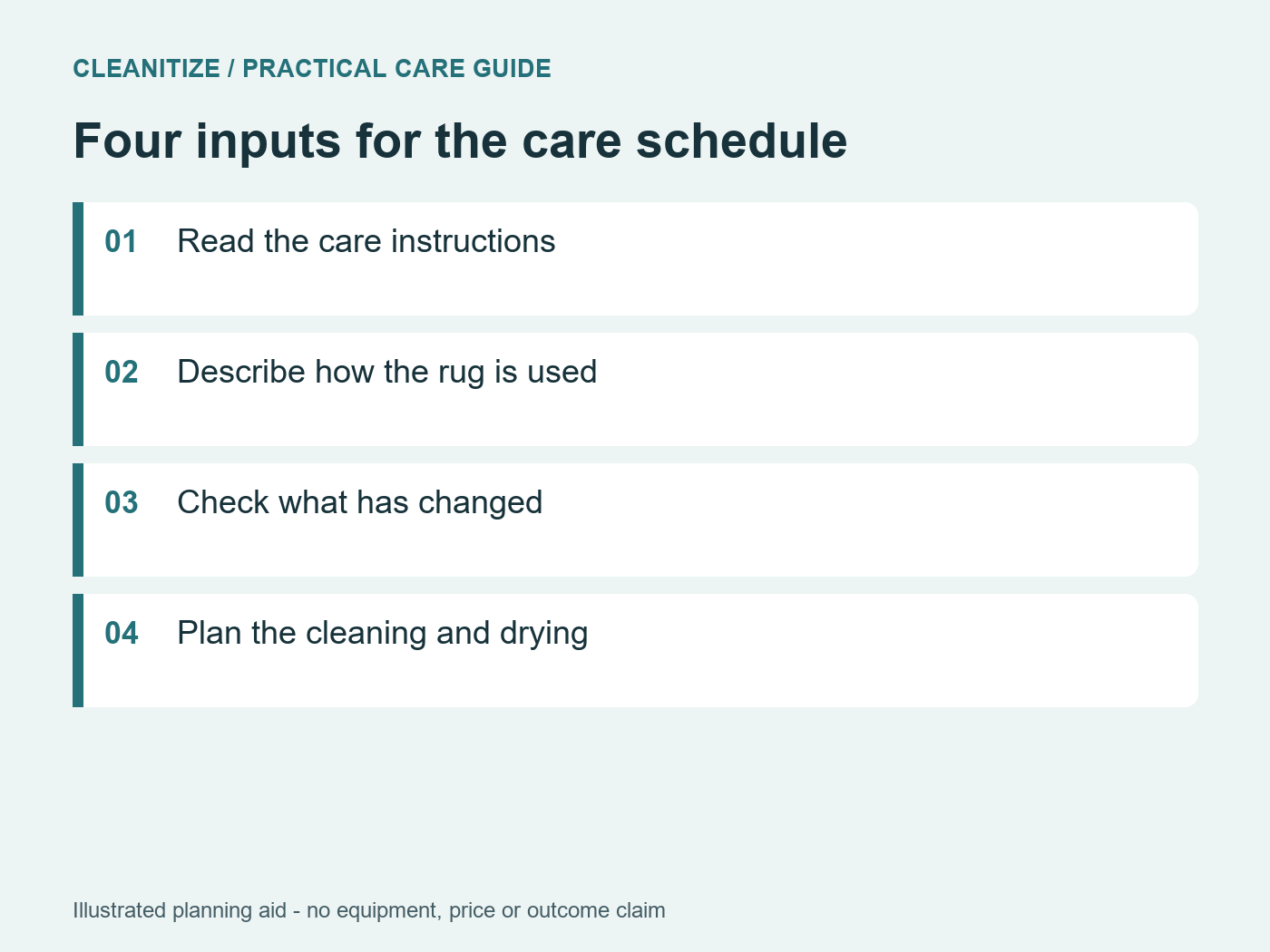
Start your schedule with the care label
Find any label, purchase record or manufacturer’s care instructions. A rug’s appearance alone may not identify its fibre, backing, dye behaviour or permitted cleaning process. Keep that information with the rug’s dimensions and photographs so it is available when you request an assessment.
A machine-washable label is permission to follow the stated washing instructions, not permission to improvise a different temperature, detergent or drying method. A dry-clean-only instruction needs a different conversation. If the label is missing, describe that uncertainty rather than selecting a household cleaning recipe from a photograph of a similar rug.
Also note earlier spot treatments. Tell the cleaner what was used, where and approximately when. This does not guarantee that an old mark can be removed, but it gives them relevant information before they propose another treatment.
Let actual use change the inspection frequency
Start with a housekeeping routine you can maintain, then check whether it is keeping up with what the rug receives. The section near a doorway, a pet’s usual resting place and the area beside a dining chair may need closer inspection than an unused corner. More frequent inspection does not always mean more frequent wet cleaning.
For example, if loose dirt is returning quickly, review how it enters the room and whether the permitted vacuuming method is effective before booking repeated treatments. If a new spill has soaked into the rug, the next annual appointment is not the right decision point: the spill needs advice appropriate to that material and substance.
Keep expectations specific. “Looks dull along one route” is more useful than “needs refreshing”. Mark the affected area on a photograph and distinguish a recent change from a patch that has looked the same since purchase. A cleaner can then discuss whether the issue appears to be soil, a mark or something that cleaning may not alter.
When should you bring a professional clean forward?
- A new spill or persistent mark: check the approved response promptly. Avoid repeatedly adding different products while waiting for a scheduled visit.
- A busy area is not responding to routine care: explain the location, material information and housekeeping method when seeking an assessment.
- A persistent smell or unexpected dampness: investigate the condition and any source of moisture. Adding fragrance is not a way to establish that the rug is ready for normal use.
- The rug has been exposed to renovation work: describe the dust exposure and discuss whether separate attention is needed before replacing it in the room.
- The condition has changed after an earlier treatment: keep the treatment details and ask for advice before applying another process.
For fitted carpets, Cleanitize’s separate guide to signs that professional cleaning may be needed explores condition-based decisions. An area rug still needs its own material and handling checks. A sign that merits assessment is not proof that a specific treatment will succeed.
Include drying in the appointment plan
A planned clean is only practical if the rug can be handled and returned to use appropriately afterwards. Ask where cleaning will take place, how drying will be managed and what conditions must be met before the rug goes back onto its usual floor or beneath furniture.
In a Singapore home, discuss the actual room and available ventilation rather than treating a generic advertised drying time as a promise. Explain whether the space must remain accessible and whether the rug can be moved safely. Do not assume that a window, fan or air conditioner on its own establishes that every part of a rug is dry.
Cleanitize’s carpet and rug cleaning service information distinguishes fitted carpets from loose rugs and says arrangements depend on size and material. Confirm the arrangement for your rug rather than assuming that on-site and off-site cleaning are interchangeable.
Keep a simple care record
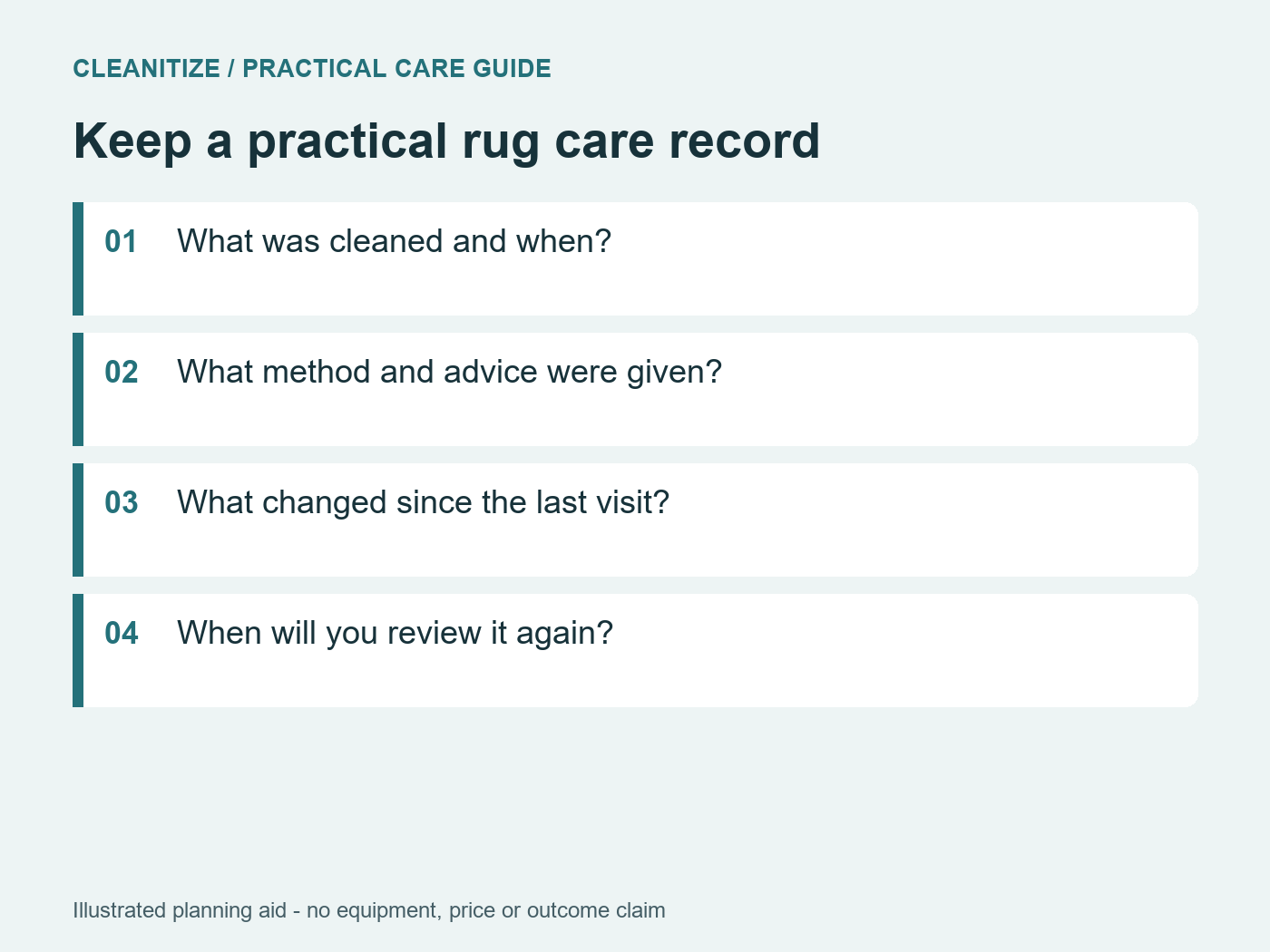
Record the last professional clean, the process used if known, any advice given and the next review point. Add a note when a significant spill or condition change occurs. This is a practical household record, not a guarantee that the rug will need the same treatment at the same interval forever.
If you have several rugs, keep separate entries. Moving a rug from a spare room into a busy living area changes its use. Reassess the routine when that happens instead of leaving the old calendar unchanged. After renovation, the separate guide to dust returning after cleaning can help distinguish a room-wide dust problem from a rug-only cleaning decision.
Common questions about rug-cleaning frequency
Does every rug need cleaning every six months?
No single interval fits every material, construction and household. Published month-based guides are starting points. Follow the manufacturer’s requirements, review actual condition and use, and seek earlier advice when something changes.
Can I wash a rug every week?
Do not confuse regular vacuuming with repeated washing. Follow the rug’s stated care instructions and the equipment instructions. If it needs attention that frequently, explain what is happening before assuming that another wet treatment is the solution.
Should a rug be cleaned even if nobody has spilled anything?
Spills are only one reason for care. Inspect how normal use affects the rug and whether routine maintenance is keeping it in suitable condition. A lack of spills does not replace a care schedule, and a calendar date does not replace an assessment.
Is an older rug always worth professionally cleaning?
That depends on its condition, construction, value to you and the proposed treatment. Ask which concerns cleaning may address and which may remain. Keep cleaning decisions separate from repair, restoration or replacement decisions.