
Is Steam Cleaning Safe for Babies, Kids & Pets?
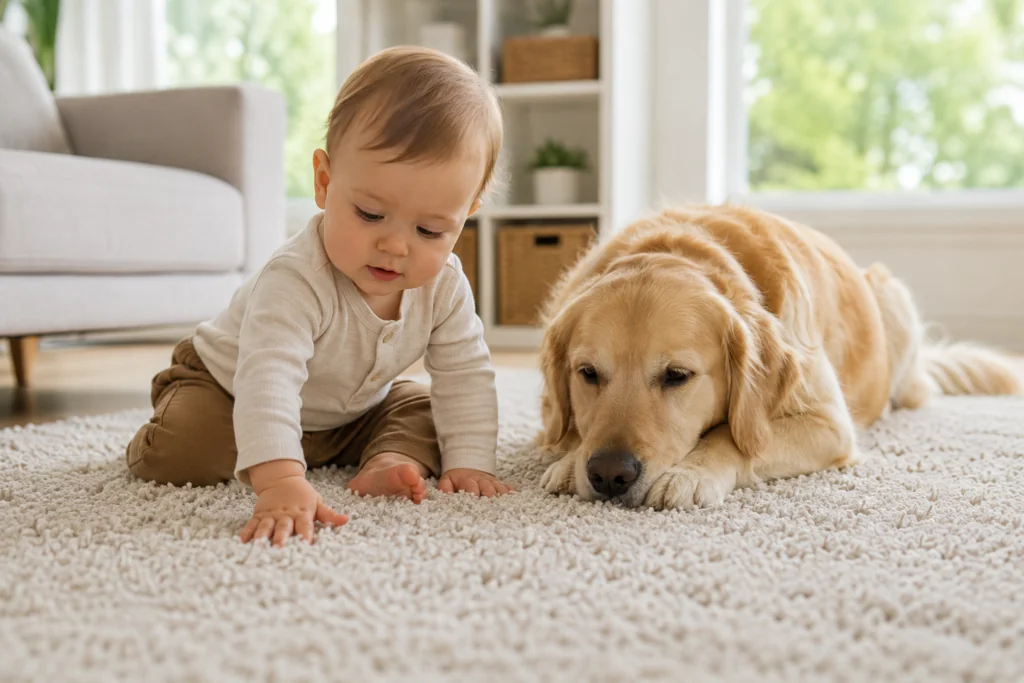
Keeping a home clean is a top priority for every parent, but when you have babies, young children, or pets crawling and playing on your floors, the products and methods you use matter more than ever. Harsh chemical cleaners can leave behind residues and fumes that irritate sensitive skin, eyes, and lungs. This is why more Singapore households are turning to steam cleaning as a safer, chemical-free alternative for maintaining a hygienic home. But is steam cleaning really safe for the youngest and most vulnerable members of your family? Let’s break down what parents need to know. What Is Steam Cleaning and How Does It Work? Steam cleaning uses water heated to a high temperature until it becomes vapour, which is then applied under pressure to surfaces such as floors, upholstery, mattresses, tiles, and grout. The heat and moisture loosen dirt, grease, and grime, while also killing bacteria, dust mites, and germs on contact. Because the process relies almost entirely on heat and water vapour rather than synthetic detergents, it is widely regarded as one of the gentlest deep-cleaning methods available for homes with children and animals. Why Steam Cleaning Is Considered a Safer Choice for Families Traditional cleaning products often contain ammonia, bleach, or synthetic fragrances that can trigger allergies, asthma, or skin irritation, particularly in babies and toddlers who spend a lot of time on the floor. Steam cleaning eliminates the need for these chemicals almost entirely, which means there is no toxic residue left behind for little hands, paws, or mouths to come into contact with. This is one of the main reasons families across Singapore are choosing professional steam cleaning service for their homes instead of relying solely on chemical-based products. In addition to being chemical-free, steam cleaning is highly effective at killing dust mites, mold spores, and common household germs, which are frequent triggers for childhood allergies and asthma flare-ups. High-temperature steam can reach into fabric fibres, mattress seams, and carpet pile in ways that vacuuming or surface wiping simply cannot. Is Steam Cleaning Safe for Babies? Yes, when done correctly, steam cleaning is generally very safe around babies. Since babies spend a significant amount of time crawling, rolling, and putting objects (and their own hands) in their mouths, avoiding chemical residues on floors and soft furnishings is especially important. Steam cleaning sanitises surfaces using heat rather than chemicals, which reduces the risk of skin irritation or accidental ingestion of cleaning agents. That said, parents should ensure the surface has fully dried and cooled before allowing a baby back onto it, as freshly steamed floors can be hot and slightly damp immediately after treatment. It is also wise to keep babies out of the room while the cleaning is actually taking place, simply as a precaution against the heat and equipment itself, rather than the steam being chemically hazardous. Is Steam Cleaning Safe for Kids? For toddlers and older children, steam cleaning offers the same chemical-free benefits, with an added layer of practicality since kids tend to introduce more dirt, food spills, and germs into the home from school, playgrounds, and shared surfaces. Steam cleaning effectively sanitises high-touch areas like play mats, sofas, and carpets without leaving behind any scent or film that could be transferred to a child’s hands or clothing. As with babies, the main safety consideration for kids is heat, not chemical exposure. Keep children away from the steam cleaning equipment and freshly treated surfaces until everything has cooled and dried, typically within 15 to 30 minutes depending on the surface and ventilation. Is Steam Cleaning Safe for Pets? Pets, much like young children, spend a great deal of time close to the floor and often groom themselves by licking their fur or paws, which makes chemical residue exposure a real concern. Steam cleaning is considered a pet-friendly option because it does not rely on detergents or disinfectant sprays that could be ingested during grooming. Precautions to Take When Steam Cleaning Around Family Areas of the Home Where Steam Cleaning Helps Most Steam cleaning is particularly effective in spaces where children and pets spend the most time, including play areas, bedrooms, living room carpets, and upholstered furniture. It is also excellent for sanitising kitchen and bathroom tiles, grout lines, and mattresses, where bacteria and dust mites tend to accumulate. Regular deep cleaning of these areas can significantly reduce allergens and improve indoor air quality for the whole family. When to Call Professional Steam Cleaning Services While handheld steam cleaners are available for small household tasks, achieving a truly deep, hygienic clean across an entire home, especially carpets, mattresses, and upholstery, is best left to trained professionals with commercial-grade equipment. Professionals understand the correct temperature, pressure, and drying times required for different surfaces, ensuring both effective cleaning and safety for babies, kids, and pets. If you are looking for a trusted, family-safe cleaning solution in Singapore, Cleanitize offers professional steam cleaning services designed with homes, children, and pets in mind. Their team uses safe, chemical-free steam cleaning methods to sanitise floors, carpets, mattresses, and upholstery, giving parents peace of mind that their home is both spotless and safe. Conclusion Steam cleaning is widely regarded as one of the safest and most effective cleaning methods for households with babies, kids, and pets, primarily because it eliminates the need for harsh chemicals while still delivering a deep, hygienic clean. As long as basic precautions are followed, such as keeping little ones and pets away from the equipment during use and allowing surfaces to dry fully, steam cleaning can be a fantastic way to maintain a healthier home environment. To enjoy the full benefits of a chemical-free, deep clean home, consider booking a professional steam cleaning appointment with Cleanitize and give your family and pets the safe, spotless space they deserve. Prefer to have it done for you? See our baby equipment cleaning in Singapore service page for what is included, how long it takes and how to get a quote.
Why Is My Carpet Always Dusty? Dust Mites & Allergens
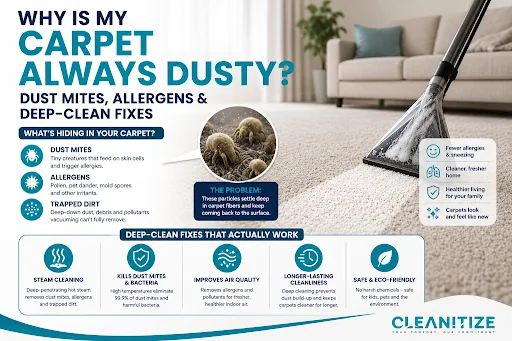
You vacuum every week. You still see a fine layer of dust settle back onto your carpet within days, and you or your family keep sneezing at home for no obvious reason. If this sounds familiar, the problem usually isn’t how often you vacuum it’s what’s living deep inside the carpet fibres that a regular vacuum cleaner can’t reach. In Singapore’s warm, humid climate, carpets are one of the easiest places in the home for dust mites and allergens to build up and one of the hardest to keep genuinely clean with surface cleaning alone. Here’s why it happens, and what actually fixes it. Why Carpets Attract So Much Dust and Allergens Carpet fibres act like a filter for your entire home. Every time someone walks across it, dust, skin cells, pollen, and pet dander already in the air settle into the fibres instead of staying airborne. Over time, this builds up deep within the pile well below the surface layer that a vacuum head actually touches. The bigger issue is what feeds on that buildup. Dust mites are microscopic creatures that live on shed human skin cells, and they thrive in warm, humid conditions which describes most Singapore homes for much of the year. Carpets, along with mattresses and upholstery, are among their favourite environments because they offer both a steady food source and the moisture they need to survive. Why Vacuuming Alone Isn’t Enough Regular vacuuming is important, but it has real limits. Standard vacuums are designed to lift surface dirt and debris not the microscopic mite bodies, shed skin, and allergen particles embedded deep in the carpet pile. In fact, without a proper HEPA filter, some vacuums can push fine dust and allergens back out into the air rather than trapping them, which is part of why a room can feel dustier right after cleaning. Dry vacuuming also does nothing to address the humidity mites depend on to survive. Since dust mites die off once humidity drops below roughly 50%, and Singapore’s ambient humidity regularly sits well above that, carpets here rarely get the dry conditions that would naturally keep mite populations down on their own. The Role of Heat and Deep Extraction This is where deep cleaning methods make the real difference. Heat is one of the most effective tools against dust mites steam cleaning doesn’t just lift embedded dirt out of the carpet fibres, it also uses heat to kill mites directly, rather than simply disturbing them the way dry vacuuming does. Proper deep cleaning also physically extracts the allergen material — shed skin, mite waste, and trapped dust rather than just loosening it. That combination of heat and extraction is what addresses both sides of the problem: reducing the mite population and removing the allergen buildup that triggers sneezing, congestion, and skin irritation in sensitive household members. Signs Your Carpet Needs More Than a Vacuum A few signals suggest your carpet has moved past what routine vacuuming can handle: Any one of these on its own might not be a major concern, but together they usually point to allergen buildup that surface cleaning simply can’t reach. How Often Should Carpets Be Deep Cleaned? For most homes, a professional deep clean every six months strikes a reasonable balance frequent enough to keep allergen levels down, without being excessive for normal household use. Homes with pets, young children, or allergy-sensitive family members often benefit from a shorter interval, since these households tend to generate more of the organic material dust mites feed on. Between professional cleans, regular HEPA-filter vacuuming and keeping indoor humidity in check will help slow the buildup but they’re a maintenance step, not a substitute for the deeper clean that actually resets the carpet. Getting a Genuinely Deep Clean If your carpet keeps looking and feeling dusty no matter how often you vacuum, the fix isn’t more frequent vacuuming it’s a cleaning method that actually reaches what’s embedded in the fibres. Carpet & rug deep cleaning uses steam and deep fibre extraction to lift out trapped dust, allergens, and dust mites that everyday vacuuming leaves behind, restoring both the look and the air quality of the room. Cleanitize provides on-site carpet and rug deep cleaning across Singapore homes and offices, using methods suited to different fabrics and family needs, including households with children and pets. Get in touch with Cleanitize to book a deep clean and find out how much of a difference it makes.
The Ultimate Carpet Stain Removal Guide
Every carpet stain has the same first few seconds that decide how the rest of the story goes. Wipe it the wrong way, wait too long, or reach for the wrong product, and a spill that could have lifted out cleanly turns into a permanent mark. The good news is that what actually removes a stain depends less on a single miracle product and more on matching the right response to what caused it, and doing that quickly.What Actually Removes Stains From Carpets in the First Place? Most stain removal comes down to two things: blotting instead of rubbing, and working from the outer edge of the stain inward. Rubbing pushes whatever caused the stain deeper into the fibres and spreads it wider, which is exactly what happens when someone panics and scrubs. Blotting lifts it out instead, using a clean cloth that gets replaced as soon as it picks up colour. The second part matters just as much. There isn’t one product that removes marker, paint, and wine equally well, because each one interacts with carpet fibres differently. Treating all three the same way is usually how a small spill becomes a stubborn stain. What Should You Do in the First Few Minutes After a Spill? Speed matters more than the exact product you reach for. Blot up as much of the spill as possible before it has a chance to soak further into the pile, working inward from the edges so you’re not spreading it outward. It’s worth testing any cleaning solution on a hidden corner of the carpet first, such as inside a closet or under furniture, since some products can affect colour or texture depending on the carpet material. Cold or lukewarm water is usually the safer starting point too. Hot water can set certain stains permanently, particularly protein-based ones, before you’ve even worked out what you’re dealing with. How Do You Get Markers and Ink Out of Carpet? Marker and ink are some of the more stubborn stains because the pigment is designed to bind to whatever surface it touches, carpet fibres included. Rubbing alcohol on a clean white cloth is generally the most effective starting point, dabbed onto the stain and blotted from the outer edge in, switching to a fresh section of cloth as soon as colour transfers onto it. This usually takes several rounds rather than one wipe, and it’s worth being patient rather than pressing harder to speed things up. Fresh marker or ink tends to respond reasonably well to this approach. Stains that have been sitting for days or weeks, or that cover a larger area, often need deeper extraction than a home treatment can manage, since the pigment has had time to work further into the fibre and sometimes into the carpet backing underneath. What’s the Right Way to Treat a Paint Stain on a Carpet? The right approach depends heavily on whether the paint is still wet or has already dried, so it’s worth checking that first. Wet paint responds well to blotting with a damp cloth and a small amount of mild dish soap in water, working from the outside of the stain inward the same way as any other spill. Dried paint is a different problem. Water-based paint can sometimes be softened again with warm water and a little patience, gently working the area rather than scraping aggressively at the fibres. Oil-based paint is considerably harder to shift once it’s dried, and aggressive scraping or the wrong solvent can damage the pile rather than lift the stain. If a dried paint stain doesn’t respond to gentle treatment fairly quickly, it’s usually a sign that professional extraction will do a better job than repeated home attempts, which can end up wearing down the fibres before the paint actually lifts. What About Everyday Spills Like Coffee, Wine, and Food? Coffee, wine, juice, and most food spills respond to the same basic approach: blot up as much as possible immediately, then work in a solution of cool water and a small amount of mild dish soap, blotting rather than scrubbing throughout. A clean white cloth matters here too, since a coloured or patterned cloth can occasionally transfer its own dye onto a damp stain. Wine in particular benefits from speed more than any special product. The longer it sits, the more it behaves like ink, binding into the fibres rather than sitting on the surface where it can still be lifted. If a spill has already dried by the time you notice it, a light dampening before blotting tends to work better than pouring a solution directly onto a dry stain. How Should You Handle Grease and Oil-Based Stains? Grease behaves differently to most everyday spills because water alone won’t break it down. A small amount of dish soap, which is designed specifically to cut through grease, worked gently into the stain with a damp cloth tends to outperform plain water by a wide margin. Blotting still applies here, working from the edge inward rather than pressing the grease further into the pile. Cornstarch or baking soda sprinkled onto a fresh grease stain before it’s touched can also help, since it absorbs some of the oil before it has a chance to settle into the fibres. Left for ten to fifteen minutes and then vacuumed away, it often reduces how much work the soap solution has to do afterward. Older grease stains that have already darkened the carpet are usually a sign the oil has worked past what surface treatment can reach. What’s Different About Pet Stains and Odours? Pet stains are rarely just a visible mark. The bigger issue is usually what’s soaked into the padding underneath, which is also why the smell often lingers well after the surface looks clean. Blotting up fresh accidents immediately, then treating the area with a solution of water and a small amount of mild dish soap, handles the visible part reasonably well. The odour is the harder part to solve