If you have ever stripped a bed and wondered what is actually living in the mattress underneath, the honest answer is: more than you would like. Mattresses absorb sweat, shed skin and body oils every single night, and in Singapore’s climate they rarely get a chance to dry out properly. That makes deep cleaning less of a luxury and more of a maintenance job — like servicing an aircon unit.
Here is how often it actually needs doing, and how to tell when yours is overdue.
The short answer: every 6 to 12 months
For most Singapore households, a professional mattress deep clean every six to twelve months is the sensible baseline. Twice a year suits homes with children, pets or allergy sufferers. Once a year is usually enough for a single adult in an air-conditioned bedroom who uses a washable mattress protector.
That range is wider than it looks, because the right interval depends far less on the calendar than on who sleeps on the mattress and what the room is like.
Why Singapore’s climate shortens the interval
Dust mites are the main reason mattresses need cleaning at all. They feed on the skin cells we shed overnight, and they multiply fastest in warm, humid conditions — which describes Singapore almost every day of the year. With average relative humidity sitting high and temperatures rarely dropping, local bedrooms sit comfortably inside the range where mites thrive.
It is not the mites themselves that cause problems so much as the allergens in their droppings, which are a well-established trigger for allergic rhinitis and asthma symptoms. Humidity also encourages mould and mildew in a mattress that never fully dries, particularly if the room is closed up during the day or the mattress sits directly on a low platform with no airflow underneath.
The practical consequence: guidance written for temperate countries tends to under-estimate how often mattresses need attention here.
How often, by household
- Allergy or asthma sufferers — every 4 to 6 months. If someone in the home wakes congested, sneezing or with itchy eyes, mite allergen load is worth controlling aggressively.
- Babies and young children — every 6 months. Young children spend more hours in bed than adults, and mattresses in kids’ rooms take more spills and accidents.
- Pets on the bed — every 6 months. Pets add dander, hair and outdoor dirt, and they shed onto bedding far more than people do.
- Two adults, no pets, protector used — every 12 months. A washable protector does a lot of work and genuinely extends the interval.
- Guest or spare room — every 12 to 18 months. Low usage, but do not skip it entirely; dust settles whether anyone sleeps there or not.
- After illness, water damage or a major spill — immediately. Do not wait for the next scheduled clean.
Signs your mattress is already overdue
The calendar is a guide; the mattress itself is better evidence. Book a clean sooner if you notice:
- Allergy symptoms that are worst in the morning. Waking with a blocked nose, sneezing or itchy eyes that ease during the day is a classic pattern for bedroom allergens.
- A musty or stale smell when you pull back the sheets, or when you press down on the mattress and air pushes out.
- Visible staining — sweat marks, yellowing around the head and hips, or old spills that were surface-cleaned but never extracted.
- Fine dust rising when you change the sheets, especially visible in a shaft of daylight.
- The mattress feels damp or cool to the touch in an unaired room.
- You have simply never had it done. If the mattress is more than a year old and has never been professionally cleaned, it is due.
What actually helps between deep cleans
Deep cleaning resets the mattress; routine habits keep it that way for longer.
- Wash bedding weekly at around 60°C. Hot washing is what kills dust mites — a cool wash removes some allergen but leaves the mites alive.
- Use a washable mattress protector and launder it with the sheets. This is the single highest-value habit on the list.
- Vacuum the mattress surface monthly, ideally with a HEPA-filtered vacuum so fine allergen is captured rather than blown back into the room.
- Air the bed before making it. Pulling the sheets straight up traps overnight moisture. Fold them back for twenty minutes first.
- Run air-conditioning or a dehumidifier to keep bedroom humidity down — this suppresses both mites and mould.
- Rotate the mattress every few months so wear and moisture are not always concentrated in the same spots.
What does not work: spraying fabric freshener over a dirty mattress, or “sunning” it on a balcony, which is impractical in most flats and does little for allergens embedded below the surface.
What a professional deep clean involves
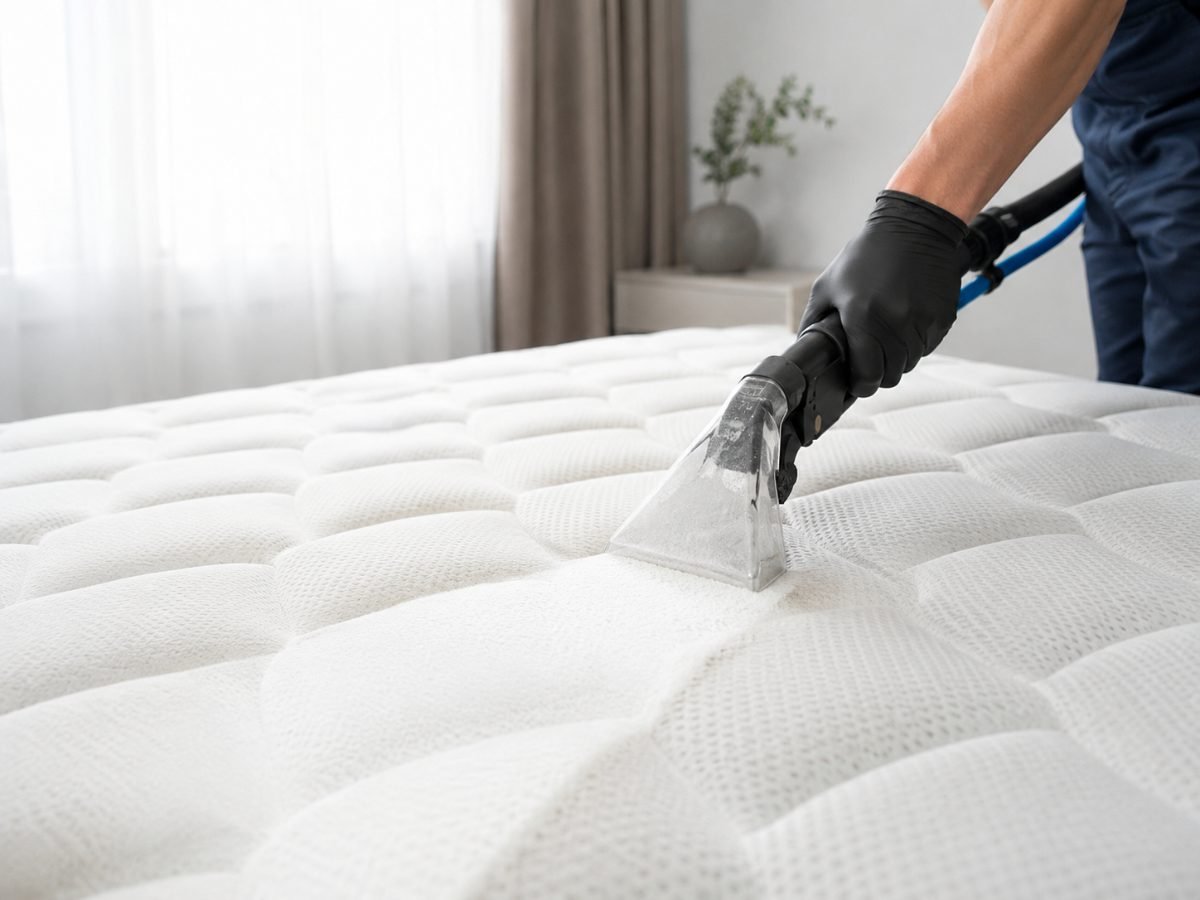
A proper service is not just a vacuum. It normally combines a HEPA vacuum pass to lift loose debris, hot-water extraction or steam to reach allergens and bacteria bedded into the fibres, targeted treatment of stains, and controlled extraction so the mattress is left only lightly damp rather than soaked. Drying time matters — a mattress that stays wet in a humid room has simply traded one problem for another.
If you want to see what that covers in practice, our mattress deep cleaning service in Singapore page sets out the process and what to expect on the day.
The bottom line
Aim for every six to twelve months, tighten to every four to six if anyone in the home has allergies or asthma, and let the smell, the staining and your own morning symptoms override the calendar when they disagree with it. A mattress is the single piece of furniture you spend a third of your life pressed against — it earns the attention.
Related reading: why your carpet is always dusty, and whether steam cleaning is safe around babies, kids and pets.