
Signs Your Carpet Needs Professional Cleaning (Not Just Vacuuming)
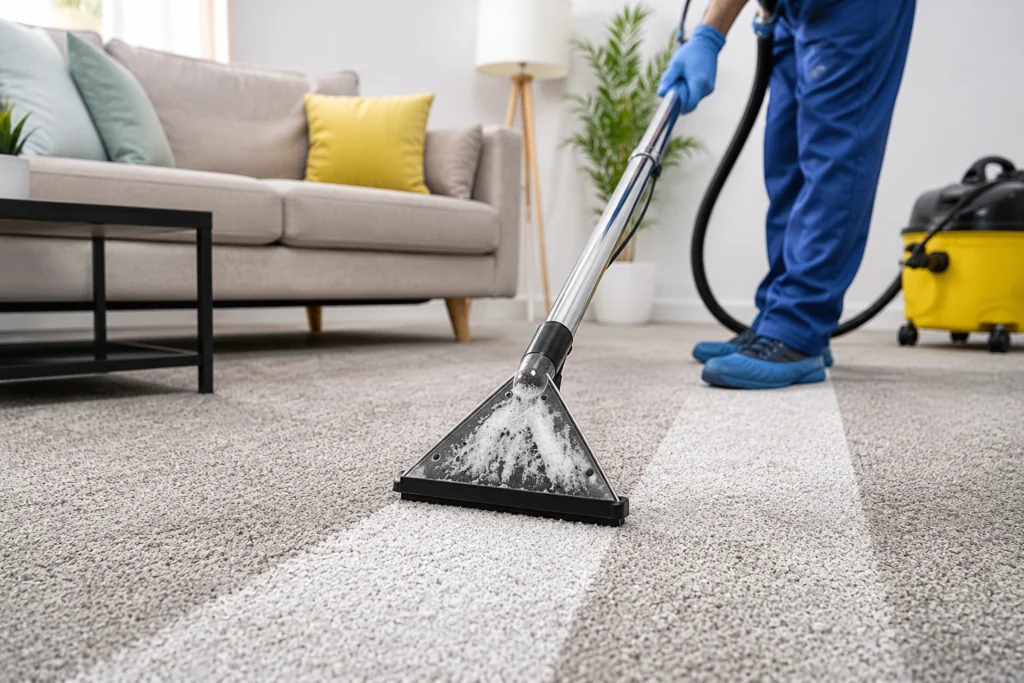
Vacuuming is a habit. Deep cleaning is a necessity. Most homeowners vacuum once or twice a week and assume that’s enough to keep their carpet healthy but vacuuming only removes surface dirt. It can’t reach the dust, allergens, bacteria, and grime trapped deep in the carpet fibers and padding below. Over time, that buildup affects more than just how your carpet looks. It can impact indoor air quality, trigger allergies, and shorten the lifespan of your flooring investment. This is especially true in Singapore, where high humidity and heavy rainfall create ideal conditions for mold, dust mites, and bacteria to thrive in carpet fibers. Below are the clearest signs that it’s time to call in a professional carpet cleaning service in Singapore. 1. Visible Stains That Won’t Lift If you’ve scrubbed a stain repeatedly and it keeps resurfacing or never fully disappeared in the first place that’s a sign the discoloration has soaked into the carpet backing or padding. Household cleaners and spot treatments only work on surface-level spills. Professional cleaners use hot water extraction and targeted stain-removal solutions that penetrate deep enough to break down set-in stains from wine, pet accidents, coffee, and mud. 2. Persistent Odors, Even After Cleaning A carpet that smells musty, sour, or simply “off” days after you’ve vacuumed is holding onto more than dust. Odors usually come from trapped moisture, pet dander, mold spores, or bacteria living in the carpet fibers and padding. Febreze and carpet powders only mask the smell temporarily. In Singapore’s year-round humidity, trapped moisture in carpet fibers can turn musty far faster than in drier climates, which is why professional deep cleaning removes the source of the odor rather than covering it up. See our guide on dealing with musty carpet smells in humid weather for more detail. 3. Increased Allergy or Asthma Symptoms Carpets act like a filter, trapping dust mites, pollen, pet dander, and other allergens. Vacuuming captures some of this, but a household vacuum cleaner typically only removes about 15–20% of the debris embedded deep in carpet fibers. If you or your family are sneezing more at home, dealing with itchy eyes, or noticing worsened asthma symptoms indoors, your carpet could be the culprit. Professional cleaning removes allergens that regular vacuuming leaves behind. 4. Carpet Feels Stiff, Rough, or Matted Healthy carpet fibers should feel soft underfoot. If your carpet feels crunchy, stiff, or matted down in high-traffic areas, that’s usually caused by a buildup of dirt, oils, and residue coating the fibers. This buildup also causes fibers to break down faster, aging your carpet prematurely. A professional deep clean restores fiber texture and extends the carpet’s usable life. 5. It’s Been Longer Than 12 Months Since the Last Deep Clean Most flooring manufacturers and the Institute of Inspection, Cleaning and Restoration Certification (IICRC) recommend professional carpet cleaning at least once every 12 months more often in high-traffic homes or households with pets and children. In Singapore’s tropical climate, many carpet cleaning providers recommend cleaning every 6 to 9 months to stay ahead of humidity-driven mold and dust mite growth. Even if your carpet looks fine on the surface, dirt and allergens accumulate gradually and invisibly. Waiting too long between cleanings can also void manufacturer warranties on many carpet products. 6. Visible Traffic Lanes or Discoloration in High-Use Areas Notice darker or dingier paths near doorways, hallways, or in front of the couch? These “traffic lanes” form when dirt and grit grind into the fibers with repeated foot traffic. Vacuuming can’t remove ground-in soil sitting below the fiber surface. Left untreated, traffic lanes become permanent, dulling the appearance of an otherwise good carpet. 7. Pet Stains, Odors, or Accidents Pet urine seeps quickly past the carpet fibers into the padding and even the subfloor. Surface cleaning does nothing to address what’s underneath, and the smell tends to return especially in humid weather. Professional cleaners use enzyme-based treatments and specialized extraction equipment designed specifically to neutralize pet stains and odors at the source. 8. Your Vacuum Cleaner Struggles to Pick Up Debris If your vacuum seems to be “pushing” dirt around rather than lifting it, or if you notice a haze of fine dust resettling on the carpet shortly after vacuuming, this points to compacted soil that a standard vacuum simply isn’t strong enough to extract. Professional-grade equipment uses higher suction power combined with hot water extraction to pull embedded dirt out from the root of the fiber. 9. Recent Water Damage or Flooding If your carpet has been exposed to water from a leak, spill, or flooding professional cleaning and drying is essential, not optional. According to the U.S. EPA’s guidance on mold and moisture, mold and mildew can begin growing within 24–48 hours of water exposure. This risk is amplified in Singapore’s climate, where ambient humidity slows natural drying. A professional water damage carpet restoration service can extract moisture properly and apply antimicrobial treatments to prevent mold from taking hold. Why Vacuuming Alone Isn’t Enough Vacuuming removes loose surface debris, but it can’t: Professional carpet cleaning typically using hot water extraction (often called steam cleaning) reaches deep into the carpet structure to remove what vacuuming leaves behind. If you’re based locally, learn more about how carpet cleaning in Singapore is tailored to combat the region’s humidity, dust, and pollution levels. How Often Should You Schedule Professional Carpet Cleaning? Household Type Recommended Frequency Single person, no pets Every 12–18 months Family with children Every 6–12 months Homes with pets Every 6 months Allergy or asthma sufferers Every 3–6 months High-traffic or commercial spaces Every 3–6 months The Bottom Line Your carpet may look clean between professional visits, but appearances can be deceiving. If you’re noticing lingering odors, visible stains, allergy flare-ups, matted fibers, or it’s simply been over a year since your last deep clean, it’s time to schedule professional carpet cleaning. Catching these signs early not only improves your indoor air quality and comfort it also protects your investment by extending the life of your
How to Clean Dirty Upholstery: A Homeowner’s Guide
Your sofa sees more daily wear than almost any other piece of furniture in your home; spilled coffee, sweaty afternoons after a run, kids jumping on the cushions, and the family pet curling up for a nap. Over time, all of that adds up. If you’ve been searching for how to clean dirty upholstery and get your fabric or leather furniture looking (and smelling) fresh again, this guide walks you through what actually works, and when it’s worth calling in the professionals. Why Does Upholstery Get Dirty So Quickly? Singapore’s humid climate makes upholstery maintenance a little more challenging than in cooler countries. Here’s what’s really happening beneath the surface of your sofa or armchair: Understanding this is the first step to cleaning dirty upholstery properly; a quick wipe-down only addresses what you can see, not what’s actually embedded in the fabric. DIY Spot-Cleaning Steps for Dirty Upholstery For light dirt, fresh spills, or general upkeep between deep cleans, these steps can help: 1. Vacuum first, always. Before applying any liquid or cleaner, vacuum the entire surface using an upholstery attachment. This removes loose dust, crumbs, and pet hair so you’re not rubbing debris further into the fabric. 2. Check the cleaning code. Most sofas and armchairs have a cleaning code tag (usually under a cushion or on the frame): Skipping this step is one of the most common reasons DIY upholstery cleaning goes wrong. 3. Spot test in a hidden area. Always test any cleaning solution on an inconspicuous patch; like the back of the sofa or underside of a cushion; before applying it to a visible area. 4. Use a mild solution for water-safe fabrics. A mix of mild dish soap and warm water, applied with a soft cloth and blotted (never rubbed), works for most everyday marks on W or WS-rated fabric. 5. Blot, don’t scrub. Rubbing pushes stains deeper into the fibres and can damage the fabric’s texture. Always blot from the outside of the stain inward. 6. Let it air-dry fully. Open windows or use a fan to speed up drying. In Singapore’s humidity, damp upholstery that doesn’t dry quickly can develop a musty smell or even mould. When DIY Cleaning Isn’t Enough DIY methods are useful for maintenance, but they have real limits; and knowing where those limits are can save your furniture from damage. It’s time to look beyond a home clean when: Why Professional Deep Cleaning Gets Results DIY Can’t Professional upholstery cleaning isn’t just a more thorough version of what you’d do at home; it uses a fundamentally different process: This is where a service like Cleanitize makes the difference: our team combines deep steam cleaning with methods matched to each fabric type, so you get a genuinely fresher result; not just a surface-level wipe-down; while keeping the process safe for families, kids, and pets. How Often Should You Deep Clean Your Upholstery? As a general guideline for Singapore homes: Just like your upholstery, your mattress also benefits from regular deep cleaning. Check out our mattress cleaning guide for a similar maintenance schedule. Final Thoughts Knowing how to clean dirty upholstery at home is genuinely useful for day-to-day upkeep; regular vacuuming, quick spot-cleaning, and checking cleaning codes before using any product will keep your furniture looking better for longer. But for set-in stains, persistent odours, or a full deep clean that reaches what’s trapped inside the fabric, a professional service is worth the investment, both for your furniture’s lifespan and your family’s comfort at home. If it’s been a while since your sofa or armchair had a proper deep clean, Cleanitize offers on-site fabric and leather sofa cleaning across Singapore, using steam cleaning methods matched to your specific upholstery. Request a free quote or message us on WhatsApp to find out what your sofa really needs. Prefer to have it done for you? See our fabric sofa cleaning in Singapore and leather sofa cleaning in Singapore service page for what is included, how long it takes and how to get a quote.
Fabric vs Leather Cleaning: Which Upholstery Actually Cleans Easier?
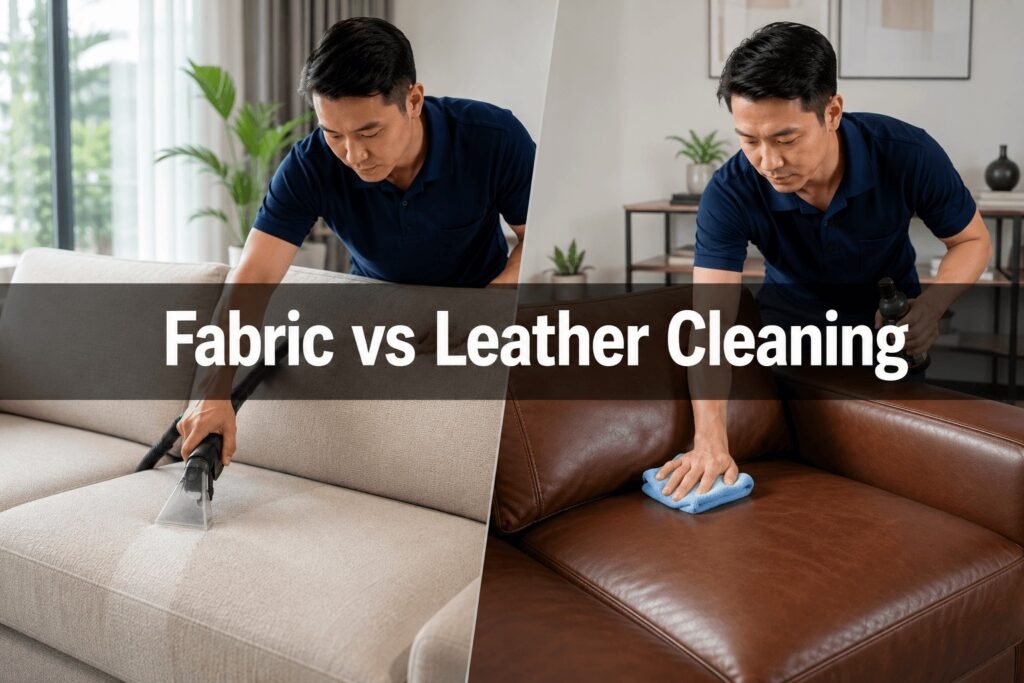
If you have ever stared at a stained sofa wondering whether you made the right choice buying fabric or leather, you are not alone. The fabric vs leather cleaning debate matters far more than most homeowners realise, because the material you own determines everything from the products you can safely use to how often you will need professional help. Get it wrong, and you risk permanently damaging an expensive piece of furniture. This guide breaks down exactly how fabric and leather cleaning differ, walks through the right methods for each, and helps you understand which material suits your lifestyle. By the end, you will know how to remove stains safely, avoid the mistakes that ruin upholstery, and decide when it’s time to call in professionals like Cleanitize. Why Fabric and Leather Need Completely Different Cleaning Approaches Fabric and leather are not just different textures; they are different materials with entirely different chemical structures. Fabric is woven from fibres (cotton, polyester, linen, or blends) that absorb liquids deep into their weave. Leather, on the other hand, is a treated animal hide with a semi-porous surface that reacts badly to excess moisture and harsh chemicals. This fundamental difference is why using the same cleaning product on both can cause disasters; think discoloured leather or a fabric sofa that develops mildew from over-wetting. How Fabric Upholstery Behaves Fabric absorbs spills quickly, which helps prevent surface staining if you act fast, but it also means liquids can seep into the cushioning underneath. Fabric is generally more breathable, making it popular in Singapore’s humid climate, though this same breathability can trap dust, allergens, and odours over time. How Leather Upholstery Behaves Leather resists spills longer because it’s less porous, giving you a slightly longer window to wipe up messes before they set in. However, leather is sensitive to heat, direct sunlight, and alcohol-based cleaners, all of which can strip its natural oils and cause cracking. Cleaning Methods: Fabric vs Leather Cleaning Compared The core of any fabric vs leather cleaning comparison comes down to method. Here’s a side-by-side breakdown. Aspect Fabric Cleaning Leather Cleaning Primary method Steam cleaning, hot water extraction, dry foam Wipe-down with leather-specific cleaner and conditioner Water tolerance Moderate to high (depending on fabric type) Low; excess water damages the surface Recommended frequency Deep clean every 6–12 months Condition every 3–6 months, wipe weekly Common products Fabric-safe upholstery shampoo, enzyme cleaners pH-balanced leather cleaner, leather conditioner DIY risk level Moderate High; easy to over-wet or over-scrub Best for allergy sufferers Requires more frequent deep cleaning Generally easier, fewer allergen traps Professional service benefit Removes deep-set stains and odours Restores shine, prevents cracking Stain Removal: What Actually Works Removing Stains from Fabric For fresh spills, blot immediately with a clean, dry cloth; never rub, as this pushes the stain deeper into the fibres. A mild solution of water and dish soap works for most everyday stains like coffee or food. For stubborn marks such as ink or wine, an enzyme-based cleaner formulated for upholstery breaks down organic compounds without bleaching the fabric. Removing Stains from Leather Leather requires a gentler touch. Wipe spills immediately with a barely damp microfibre cloth; no soaking. For grease or oil marks, sprinkle cornstarch on the spot, let it absorb overnight, then brush it away. Avoid baby wipes, vinegar, or alcohol-based solutions, as these strip leather’s protective finish and accelerate cracking. Maintenance and Durability Over Time Leather generally outlasts fabric when properly maintained, often lasting 15–25 years compared to fabric’s typical 7–15 year lifespan. However, that durability depends entirely on consistent conditioning. Neglected leather cracks and fades faster than well-maintained fabric. Fabric, meanwhile, is more forgiving of inconsistent care but shows wear through pilling, fraying, and colour fading; especially in sun-exposed areas common in Singapore homes and condos. Climate Considerations for Singapore Homes Singapore’s humidity accelerates mildew growth in fabric upholstery if it is not dried properly after cleaning, while the same humidity can cause leather to feel sticky or develop mould in poorly ventilated spaces. Both materials benefit from dehumidifiers and good airflow, but leather specifically needs conditioning more frequently in humid conditions to prevent it from drying out under air conditioning. The same humidity concerns apply to other soft furnishings at home; if you are also wondering whether your curtains need steam cleaning or a full wash, see our guide on Curtain Steam Cleaning vs Dry Cleaning. Cost Comparison: Cleaning and Upkeep Fabric cleaning products and professional steam cleaning services tend to cost less per session than leather conditioning treatments, but fabric often requires more frequent deep cleans to stay fresh. Leather conditioning costs more per visit but is needed less often, which can even out over a sofa’s lifetime. Long-term, leather furniture typically has a higher upfront cost but lower cumulative cleaning costs if it’s well cared for. Common Mistakes That Damage Upholstery When to Call Professional Upholstery Cleaners DIY cleaning handles everyday maintenance well, but certain situations call for professional expertise: deep-set stains, persistent odours, pet accidents, mould growth, or leather that is begun to crack or discolour. Professional cleaners use equipment like hot water extraction for fabric and specialised pH-balanced treatments for leather that safely lift dirt without damaging fibres or hide. This is particularly valuable in Singapore, where humidity makes DIY drying difficult to control. How to Choose Between Fabric and Leather for Easier Cleaning If you have young children, pets, or a household prone to spills, leather’s wipe-and-go convenience is often easier day-to-day, provided you are willing to condition it regularly. If you prioritise comfort, breathability, and a wider range of colours and textures, fabric may suit you better, especially with fabric-protection treatments applied at purchase. Ultimately, the fabric vs leather cleaning decision is not about which material is “easier” in absolute terms; it’s about which maintenance routine fits your lifestyle and how much time you are willing to invest. Final Thoughts and Practical Next Steps Both fabric and leather can look pristine for years with the right care, but